Short answer
Dropshipping is a retail model where you sell products you never stock. A customer pays your store, you buy the item from a supplier, and the supplier ships it straight to the customer. You keep the difference, but you still own the customer, the delivery promise and any refunds.
Key takeaways
- You set the price; the supplier holds the stock and ships the parcel.
- The customer bought from you, so refunds and chargebacks land on you.
- It removes inventory cost, not marketing, service or ad costs.
- Delivery times you publish are your legal promise in the US.
That is the whole trick, and it is a real one. It removes the biggest upfront cost of retail, which is buying inventory before you know whether it sells. What it does not remove is everything else a shop has to do: choose products people want, make them look worth the money, get them in front of buyers, and look after people when a parcel goes missing.
This chapter walks one order through the business so the rest of the course has something concrete to stand on.
In this chapter8 sections
Why this chapter matters
- Every later decision (product, supplier, store, ads) is a trade-off inside this one money flow. If you can draw it, you can price anything.
- Most beginner losses come from believing the supplier carries the risk. Legally and practically, the customer bought from you.
- Knowing what the model is not saves you from courses that sell it as passive income.
What tools do you need for this step?
Prices checked November 2026. Estimates are marked as ranges.
How does dropshipping work, step by step?
Imagine you sell a phone tripod for $24.99. A shopper finds it through an ad, pays you $24.99 plus shipping, and gets an order confirmation from your store's name. They have never heard of your supplier and never will.
Behind the scenes, the order lands in your store's admin. You (or an app) place the same order with your supplier and pay the supplier's price.
The supplier packs it and ships it. When it has a tracking number, that number flows back to your store and on to the customer.
Customer
pays $24.99
Buys the tripod on your store, sees only your brand.
Your store
keeps $16.59
Before ads, card fees and refunds. This is what you work with.
Supplier
paid $8.40
Product $6.10 + shipping $2.30, charged to your card.
The parcel skips you. The supplier ships straight to the customer and the tracking number flows back through your store.
1. Customer pays you
Money lands in your payment processor (Shopify Payments, PayPal, Stripe). Your store collects sales tax where it applies.
2. You pay the supplier
You buy the item at the supplier's price, usually with your own card, and give them the customer's shipping address.
3. Supplier ships
The parcel goes straight to the customer. Good suppliers leave out invoices and their own marketing inserts.
4. Tracking flows back
The tracking number gets added to the order in your store so the customer can follow the parcel.
What are you still responsible for?
The supplier's job ends when the parcel leaves the warehouse. Yours does not. The customer's contract is with your store, so refunds, late deliveries, broken items and chargebacks all come back to you, and your card is the one charged for the product either way.
- The promise. Delivery times on your product page are your promise, not the supplier's. In the US, the FTC's Mail, Internet, or Telephone Order Merchandise Rule requires a reasonable basis for any shipping time you state, and a 30-day default when you state none.
- The customer service. Questions arrive in your inbox. "Where is my order?" will be most of them.
- The money risk. If the customer disputes the charge with their bank, the chargeback hits your processor account, and you have usually already paid the supplier.
- The brand. Product photos, page copy and the unboxing all reflect on you, even though you never touched the box.
What are the biggest myths about dropshipping?
Most of what is wrong with dropshipping's reputation comes from how it gets sold. Three corrections save a lot of money.
It isn't passive income
A store with real sales means daily work: checking ad results, answering emails, chasing late parcels, testing new products. You trade a warehouse problem for a marketing and service problem.
It isn't free to start
You avoid buying stock, but you still pay for a store plan, apps, a domain, samples, and above all ads. Chapter 2 builds a realistic starting budget.
It isn't a product, it's a fulfillment method
Plenty of established brands ship some lines straight from a manufacturer or partner. Dropshipping is just how the box gets to the door. Whether you have a business depends on whether people want what you sell from you, at your price.
What types of dropshipping are there?
"Dropshipping" covers several setups that feel very different once you are running them. You don't have to pick forever, but know which one you are starting with.
| Model | Where products come from | Typical delivery | Good for |
|---|---|---|---|
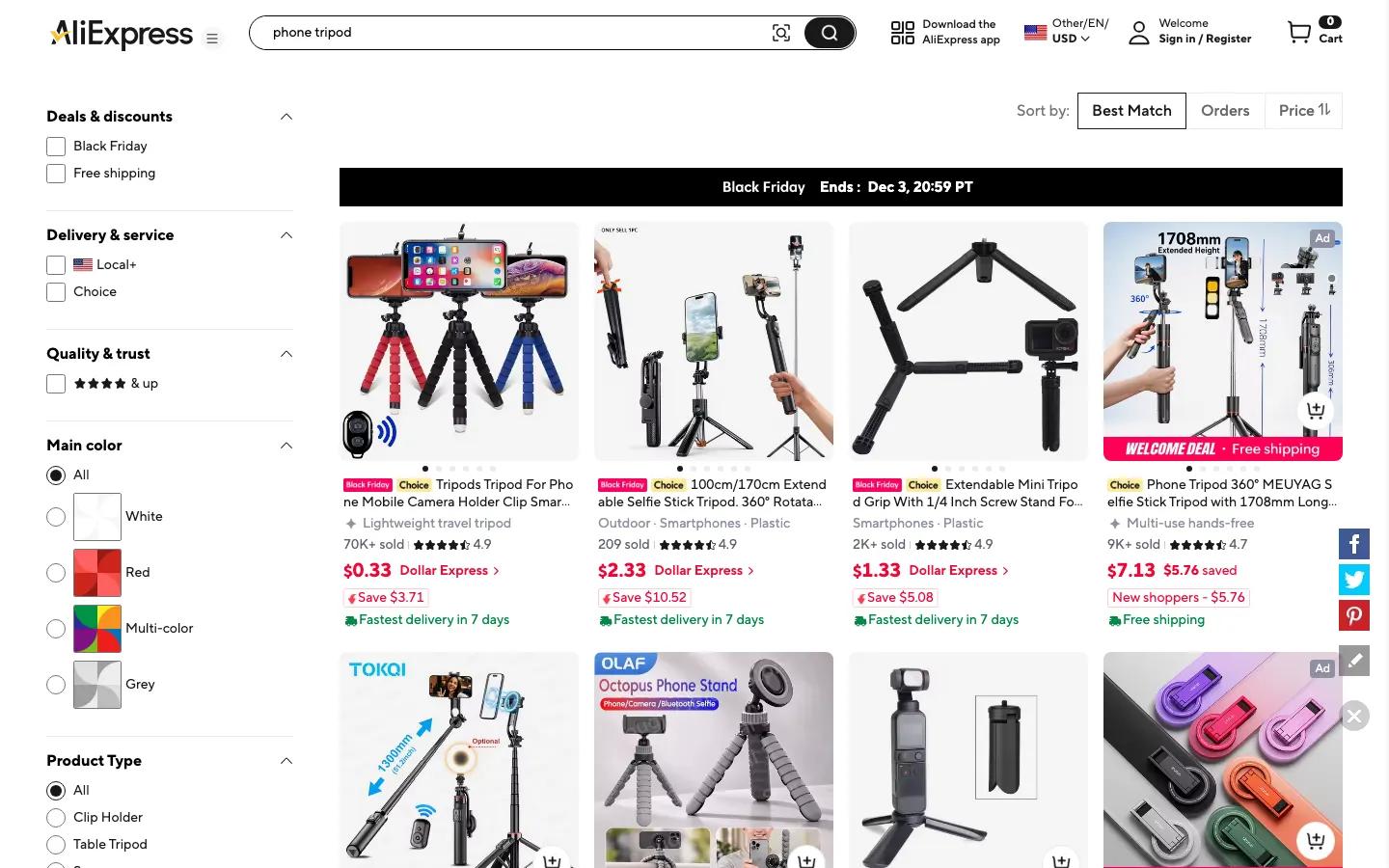
| Marketplace sourcing | AliExpress sellers, via an app like DSers | Roughly 7 to 20 days to the US | Cheap testing, many products |
| Agent / platform | CJdropshipping, Zendrop or a private agent | Often faster, with custom packaging later | Scaling a product that works |
| Local suppliers | US and EU warehouses (Spocket and others) | Days, not weeks | Higher prices, fewer complaints |
| Print on demand | Printful, Printify and similar | Production plus a few days | Designs, merch, audiences you own |
Delivery ranges are estimates from listings we checked in November 2026 and vary a lot by product and destination. Always read the estimate on the specific listing.
Is dropshipping legal?
Yes. Dropshipping is an ordinary retail arrangement. What can get a store in trouble is what it sells and how it sells it: counterfeit or trademarked goods, health claims a product can't back up, shipping promises it can't keep, or skipping sales tax and business registration.
Rules vary by country and US state, so treat this course as orientation, not legal advice. Before your first sale, look up how your state handles business registration and sales tax, and read the terms of your payment processor. Chapter 5 covers the store policies you need on day one.
What mistakes should you avoid?
Treating the supplier as the seller
Customers don't care who packed the box. Promise only what you can enforce, and keep a refund budget.
Copying a supplier's delivery estimate as a guarantee
Pad estimates and write them as ranges. Late parcels are the top cause of refunds and chargebacks for new stores.
Starting with "what's trending" instead of the money flow
If you can't fill in the price, product cost and shipping for an item, you aren't ready to advertise it.
What else do beginners ask?
How does a dropshipper make money?
By charging more than the supplier's price plus shipping. On a $24.99 order with an $8.40 landed cost, $16.59 is left to cover ads, card fees and refunds before any profit.
Do I need a business license to start dropshipping?
It depends on where you live. Many US states require registration and a sales tax permit once you sell. Check your state's rules before your first sale; this course is not legal advice.
Is dropshipping the same as print on demand?
Print on demand is one type of dropshipping. A partner prints your design on a blank product only after an order comes in, then ships it to the customer for you.
Who handles returns in dropshipping?
You do. Customers return to your store, not the supplier. Many stores refund or replace low-cost items without asking for the product back, because return shipping overseas costs more than the item.